The CRE Methodology™: a proven process for growing online businesses using conversion rate optimization
It’s an overview of the Conversion Rate Experts Methodology (CRE Methodology™)—a systematic process, which we use on all of our clients.
- Step 1: The Rules of the Game (and how to win at it)
- Step 2: Understanding (and tuning) existing traffic sources
- Step 3: Understanding your visitors (particularly the non-converting ones)
- Step 4: Advanced market intelligence
- Step 5: Spotting the hidden wealth in your business
- Step 6: Creating your experimental strategy
- Step 7: Designing your experimental web pages (your “challengers”)
- Step 8: Carrying out experiments on your website
- Step 9: Transferring your winning campaigns into other media
Beyond best practices
Someone suggested we write an article about best practices for conversion. You know the kind of thing: magic buttons that convert, “killer” copywriting words, winning layouts, etc. Unfortunately, that little box of tricks doesn’t take you very far. In fact, it sometimes takes you nowhere.
The real best practice isn’t a particular type of page element at all. It’s a well-defined, systematic process—a series of steps you need to take.
The CRE Methodology™ is significantly different from what most people are doing. We’ve mentioned it in conference talks, but this is the first time we’ve published an overview of it. It doesn’t involve shoot-from-the-hip guesswork, and it doesn’t have the excitement and appeal of magic buttons. In fact, in many respects it looks a lot like hard work. It requires intelligence, experience, craft, and expertise in a wide range of disciplines. But experience has shown that it works, time and time again. It’s what we do every day for our clients.
And we are proud that some of the web’s most sophisticated companies have adopted it; we’ve spent the past few years working with clients like Amazon, Apple, Google, Facebook, and Dropbox—plus some outstanding, forward-looking small businesses. Improvements of over 100% are commonplace.
In summary, it works.
Here it is.
Step 1: The Rules of the Game (and how to win at it): Coming up with your strategy, discussing your long-term goals, and deciding how we’ll measure success
Many new clients start out with the expectation that our consultants will arrive at the first meeting with a list of things to test. We intentionally don’t look for improvements on your site at this stage of the process. Here are a few reasons why:
1. We need to find out which parts of your business are underperforming and why. Most clients come to us with a preconceived idea of what should be worked on. Ironically, the opportunities usually lie elsewhere—in their blind spots. First, we discuss your strategy and vision for the business. We seek to determine the key performance indicators (KPIs) that will ensure you meet your goals. This is important to us because it’s paramount that our team’s goals be aligned with yours.
2. We don’t know yet why people aren’t converting. At this point, we also don’t know why your visitors aren’t converting, so any suggestions we made would be theoretical rather than based on evidence. From our experience, evidence-based recommendations are much more likely to give breakthrough results than glib “best practice” ones.
3. We need to experience your business as a customer with a “fresh pair of eyes.” It is important to have customer empathy and to understand the thought processes your visitors are going through. If we start looking at your website from a marketer’s perspective, it removes that fresh pair of eyes advantage. So, one of the first things we do with all our projects is to become the customer.
Step 2: Understanding (and tuning) existing traffic sources
It’s impossible to critique a website without knowing from where its visitors are coming, on which landing pages they arrive, and how they navigate around the site.
We take a bird’s-eye view of your business, identifying the areas that appear to hold the greatest opportunity.
We will seek to understand your entire conversion funnel, starting with the initial ad impression where someone first encounters your business and finishing with the thank-you page and beyond (there’s often a lot of opportunity in optimizing post-sale events such as referral programs, up-sells, and email marketing). To sketch your conversion funnel, we map out every action that a prospect has to take to become your customer.
We aim to work on the areas of your business that will have the biggest impact on your goals. We also prioritize our efforts on parts of your business that are easiest to make changes to.
The best way to visualize this process is by thinking about blocked arteries and missing links. Just as an artery in your body is the highway that carries large volumes of blood, an artery in your business is a high-volume pathway that leads to sales. Once we have identified your business’s arteries, we search for blockages in them—that is, aspects of them that are underperforming.
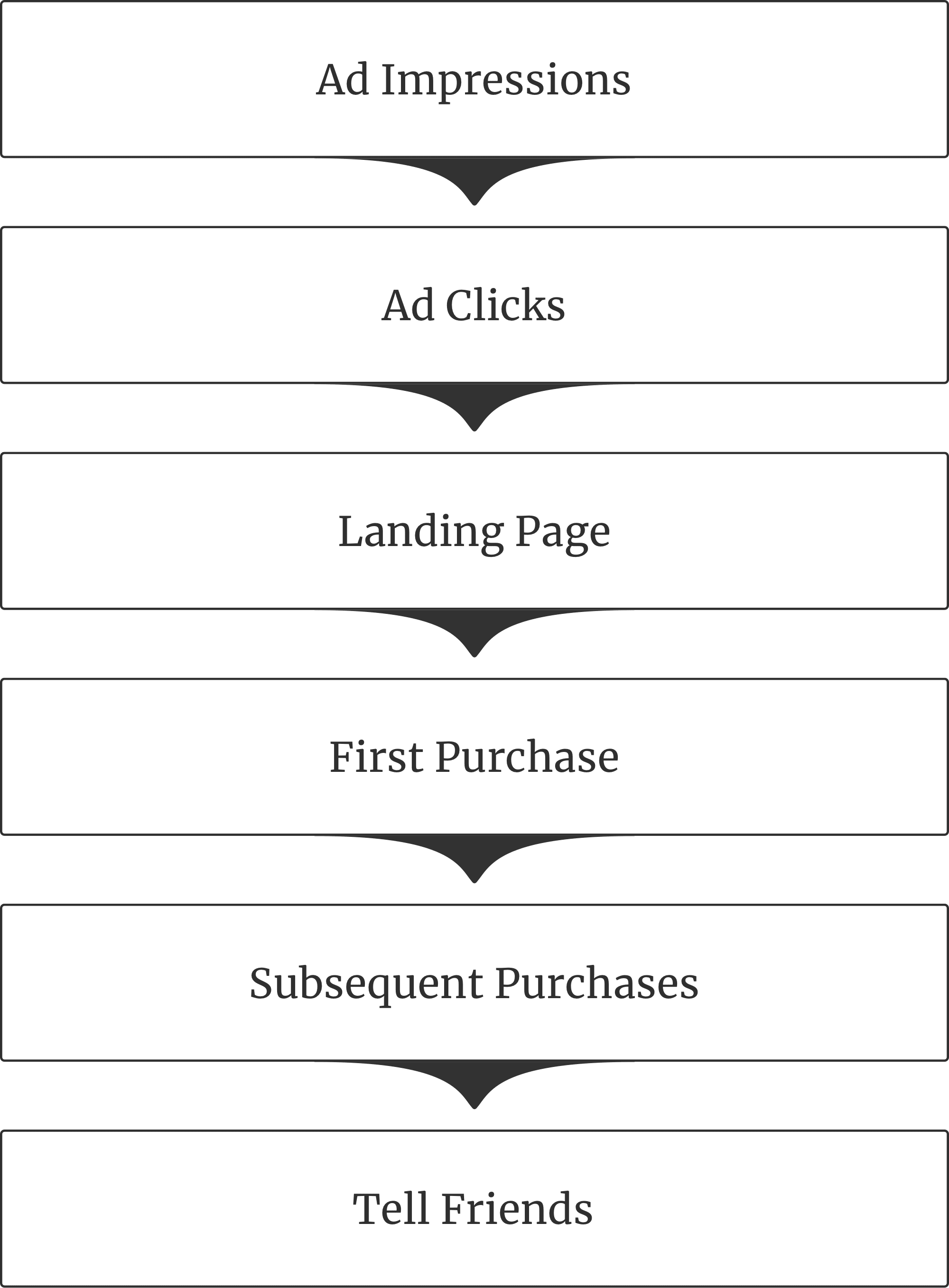
Missing links are parts of your conversion funnel that have not been created yet, such as these:
- Turning a one-step sale into a multi-step sale.
- Adding a well-placed “Refer-a-Friend” program.
- Adding an effective email auto-responder sequence.
- Adding a series of post-sale offers.
- Growing a customer community.
- Rolling out successes into other media.
Step 3: Understanding your visitors (particularly the non-converting ones)
We don’t guess what the blockages are; we find out. Typically this comes down to a very quick research project. The research is aimed at understanding the people that are coming to your website, and their intentions.
The key question is “Why aren’t visitors converting?”
The answer typically comes from research in these core areas:
- Understanding different visitor types and intentions.
- Identifying user-experience problems.
- Gathering and understanding visitors’ objections.
This may sound like a lot of work, but it all happens within the first few weeks of the project. We can do this because the research is so focused on the one action we want to improve, based on the analysis of your conversion funnel.
1. Understanding different visitor types and intentions
It doesn’t matter how good your website or product is if you’re asking the wrong people to do the wrong thing at the wrong time—which is why we start with an understanding of your different visitor types and visitor intentions. The process typically revolves around your web analytics platform and customer database.
We’ll seek to understand your different traffic sources, and how they behave:
- New visitors vs. repeat visitors.
- Which referring sources of traffic convert best?
- Do you have distinct visitor types, based on the visitors’ situations, their past experiences, or their intentions?
- Branded keywords vs. generic keywords.
Understanding these different visitors will give us a solid idea of how to organize your conversion funnel, so we’re showing the right content, with the right call-to-action, to the right visitors, at the right time in their buying journey.
2. Identifying user-experience problems
All websites have some visitors who don’t convert simply because something prevents them from doing so; they’re willing but unable:
- Does the site load correctly in the browsers your visitors use?
- Do the pages load fast enough?
- Is it easy for users to navigate through the site and know what they need to do?
- Is the copy clear or confusing?
- Are forms easy to use?
- Do users encounter error messages that confuse or deter them?
We use a wide range of tools and techniques to identify user-experience issues, and then we design tests to overcome problems.
3. Gathering and understanding visitors’ objections
Next, we’ll seek to understand why most of your visitors aren’t persuaded. Those people, however, come and go without a trace! How do you know what they wanted? How do you know what would have persuaded them to take action?
If you owned a real-life bricks-and-mortar store, this would be easy: You’d hear their objections. You’d be able to ask questions. You’d hear what they muttered as they headed for the door.
Capturing the voice of the customer is more difficult with the web, but it can be done. We’ll start by recommending appropriate feedback mechanisms for capturing the most common objections. We’ll then gather, record, and analyze the feedback.
We call this the Objection/Counter-Objection (O/CO) approach; we identify (not guess) your customers’ objections and then develop strong counter-objections.

Step 4: Advanced market intelligence
No business exists in a vacuum. We study your marketplace—for example, your competitors, any expert commentators, and what your customers are saying in social media and on review sites—and then we explore possibilities for improving your positioning by building upon your company’s core strengths.
Also, because we’ve had an unusually varied experience in terms of markets and geography, we are in a good position to transfer winning strategies from other industries into your business. Your biggest problems may have already been solved by a company in another country or vertical market.
Step 5: Spotting the hidden wealth in your business
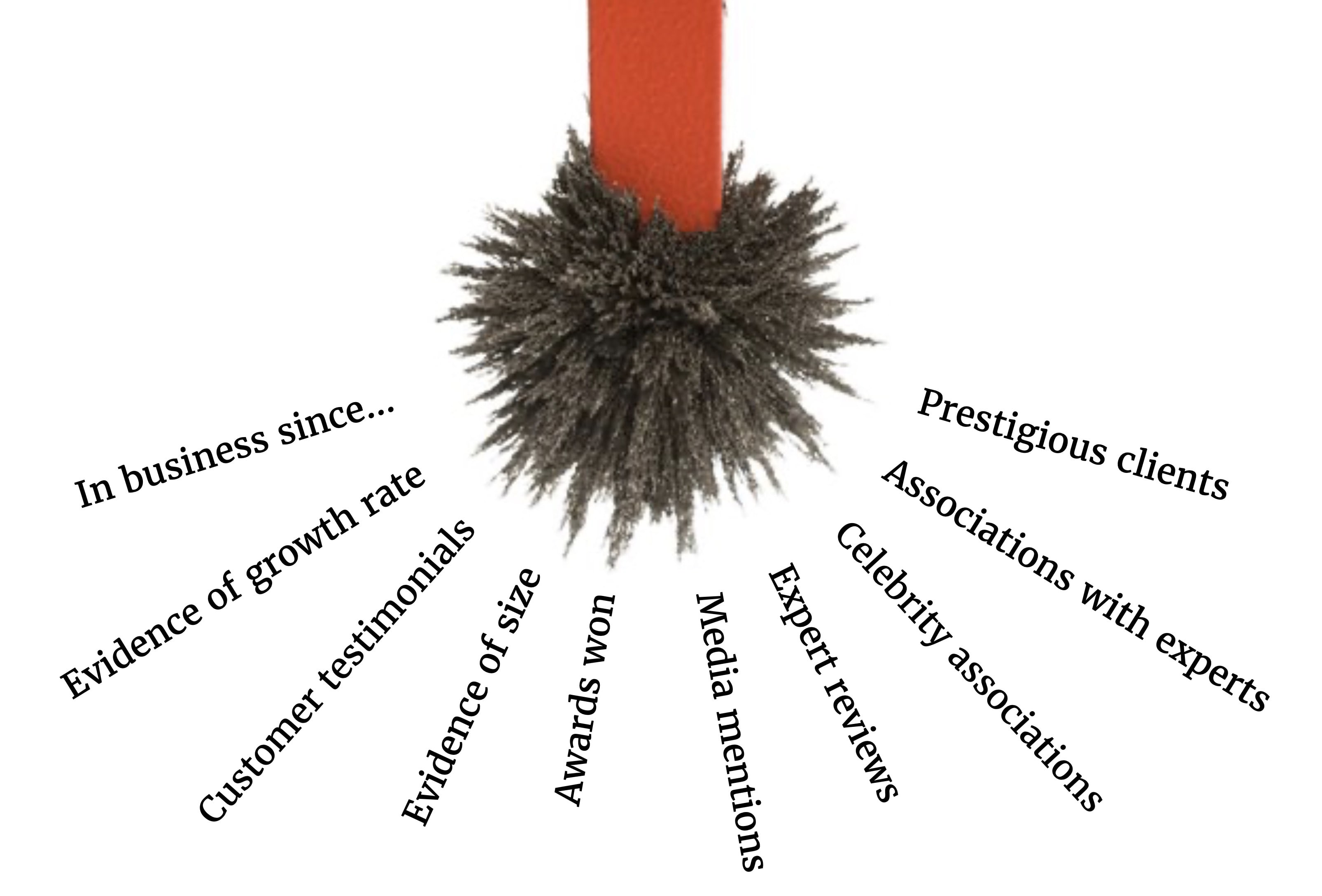
Each of our clients has had elements within its business that would have been highly persuasive to its prospects but that the prospects never saw. The key is to identify all of these persuasion assets and then present them to the prospects at the right time in the buying process. Sometimes, the challenge lies in creating a wish list of persuasive assets that the company needs to acquire.
Step 6: Creating your experimental strategy
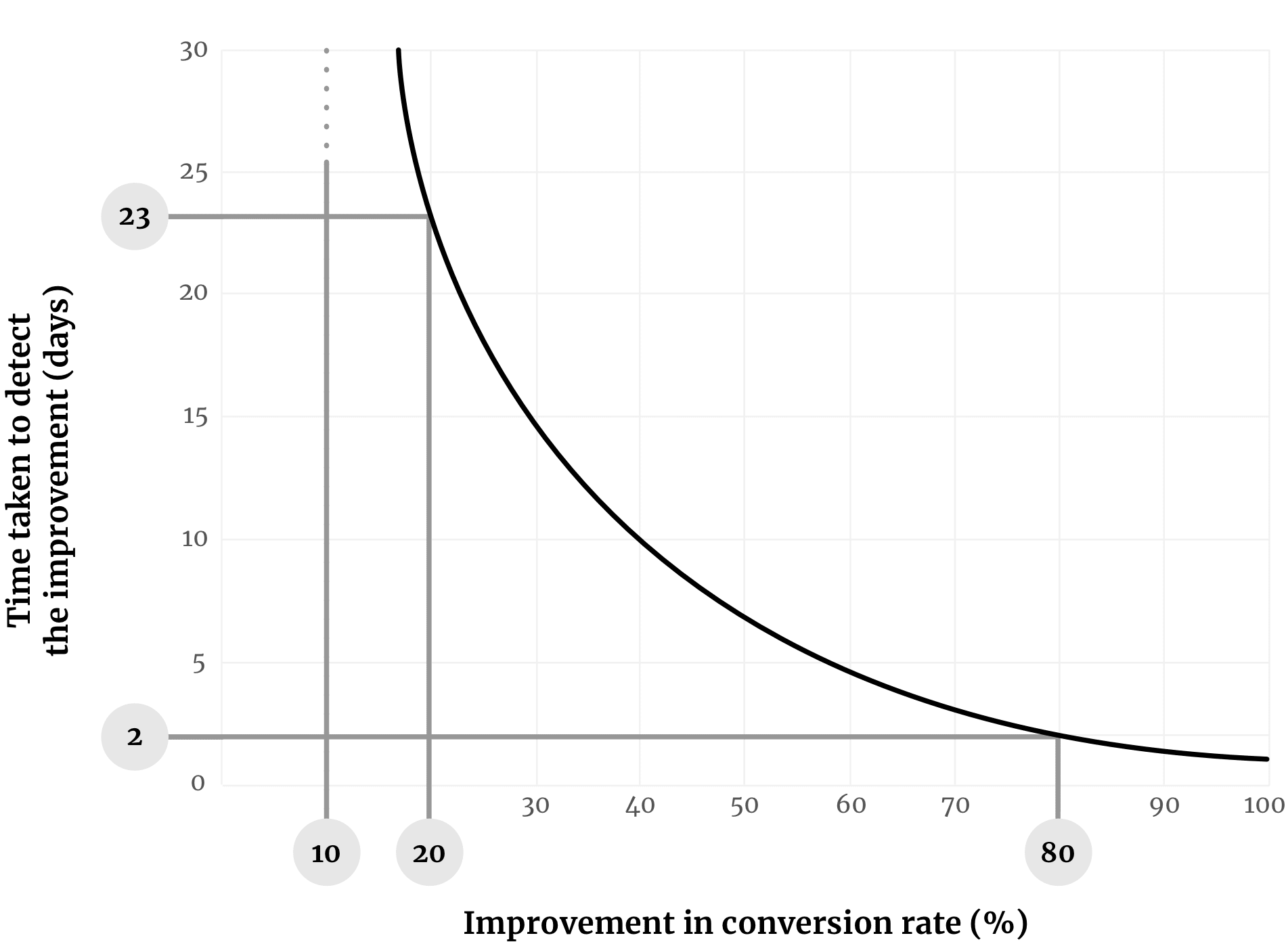
It’s a myth that you can transform a business by making “meek tweaks”; extraordinary improvements come from extraordinary ideas. We take all of the ideas we’ve generated from the research and prioritize those big, bold, targeted ones that will grow your business in the shortest time. Bold changes give you more profit, and you get quicker, larger returns (it’s a statistics thing). And they’re usually more fun. If you carry out “meek tweaking,” on the other hand, your tests seldom reach significance, you get disheartened, and, most upsettingly of all, you lose the commitment of your colleagues.
After collating all the ideas, we prioritize them based on three simple metrics:
- How likely is it to double your conversion rate? Asking this question helps to ensure that we’re prioritizing the big opportunities. Bigger, bolder tests are given a higher priority; meek tweaks are demoted.
- How easy is it to implement the test? We’re looking for the quick wins with the biggest financial impact, so changes that are easy to implement are given a higher priority.
- Has this idea worked before? Once you’re testing, you’ll quickly start learning what your visitors respond to. Every test we develop is documented so that we can review and prioritize ideas that are inspired by winning tests.
Step 7: Designing your experimental web pages (your “challengers”)
At this stage, we create the content that we’ll be testing.
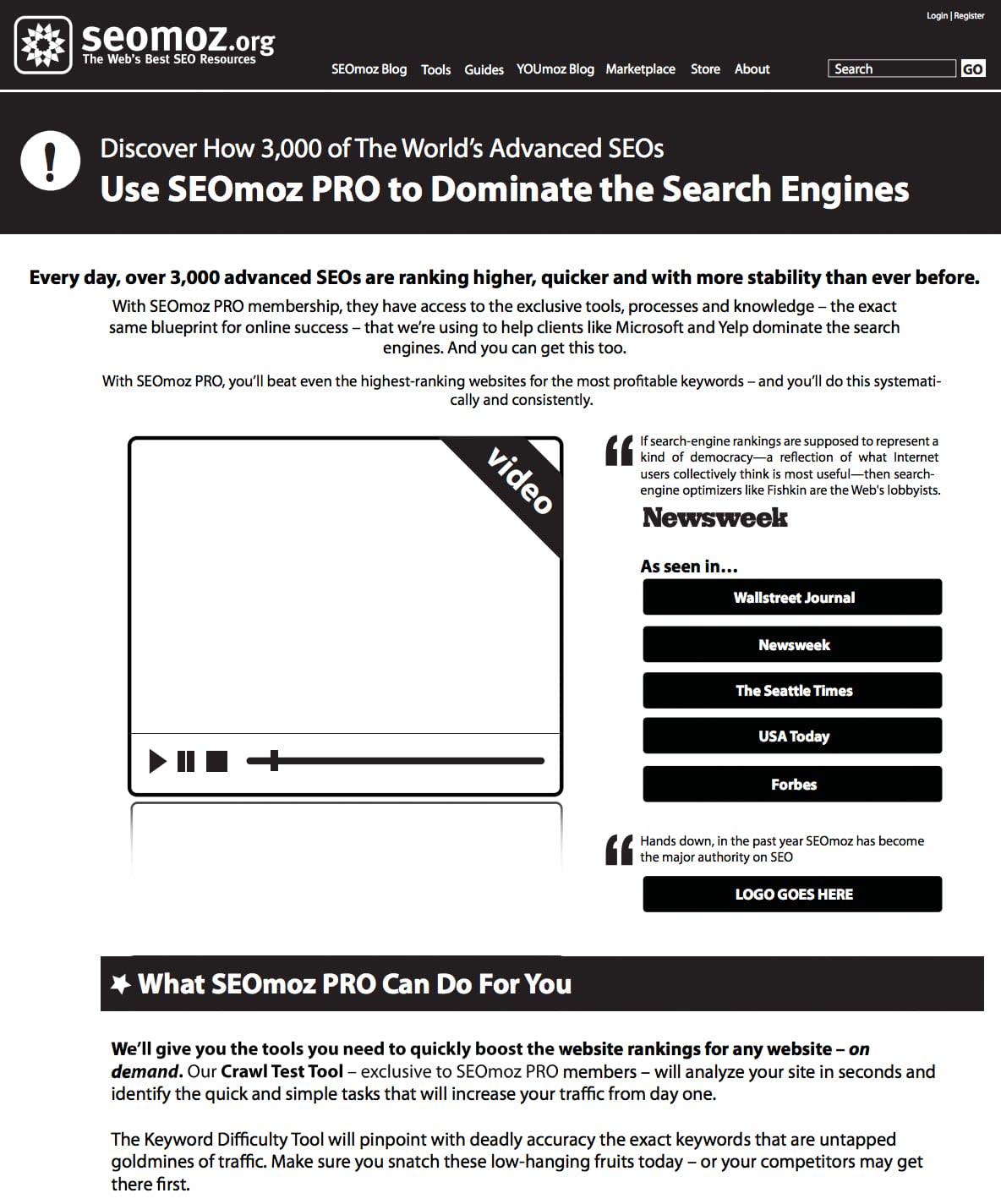
Note that novices usually begin at this stage. They base their designs on guesswork and so-called “best practices,” and then they get disheartened when their tests fail. Our experience has shown that the significant wins come from basing the new content upon insights that were gleaned from the previous six steps.
First, we’ll create a wireframe of the new page (or page element). The wireframe will be designed to be more persuasive, more believable, and more user-friendly than the existing version. Though we don’t take responsibility for every word of copy on your website, we do focus on critical copy elements such as the headline, introductory paragraphs, and calls-to-action. We’ll carry out several usability tests on the wireframe and discuss the test results in detail with you and your team. With most of our clients, we work with the client’s existing copywriters and designers.
Some clients require more support, and in such cases, we do the design, copywriting, usability testing, and test development for you. For more information, ask us about our Full Service engagement.
Step 8: Carrying out experiments on your website
There are many software platforms for tracking and testing, each of which has its own benefits. If you don’t already have one in place, we’ll offer you some suggestions based on your needs. We do not profit from selling or recommending software. We’re 100% vendor neutral and use the tools that are best for your business.
Platforms that are popular with our clients include Optimizely, VWO, Convert.com, and Adobe Target.
Once the split testing platform is in place, we’ll run through and verify that everything is set up properly. Then, for each split test, we follow a procedure that ensures that all team members understand what the test is:
- Why we’re running it.
- How it fits into the site.
- How it aligns with the business goals.
- How we’ll measure success.
Once a test is started, the software takes over. All split testing software automatically calculates when one version of the page has generated significantly more conversions, from a statistics perspective, than the others. At this point, you can end the test and promote the winning version to be your new “control.”
Step 9: Transferring your winning campaigns into other media
Diversifying your customer acquisition channels gives your business more stability. Your increased conversion rate will mean you can profitably invest more in advertising channels, such as SEO, PPC, social media, affiliate marketing, and offline media. If desired, we can recommend how you can use the improvements to acquire more customers.
We’ll also help you to explore how you can implement the insights from your winning experiments in other parts of your marketing funnel; e.g.:
- A winning appeal in a landing page test can provide a winning headline for your Google Ads campaigns (or vice versa).
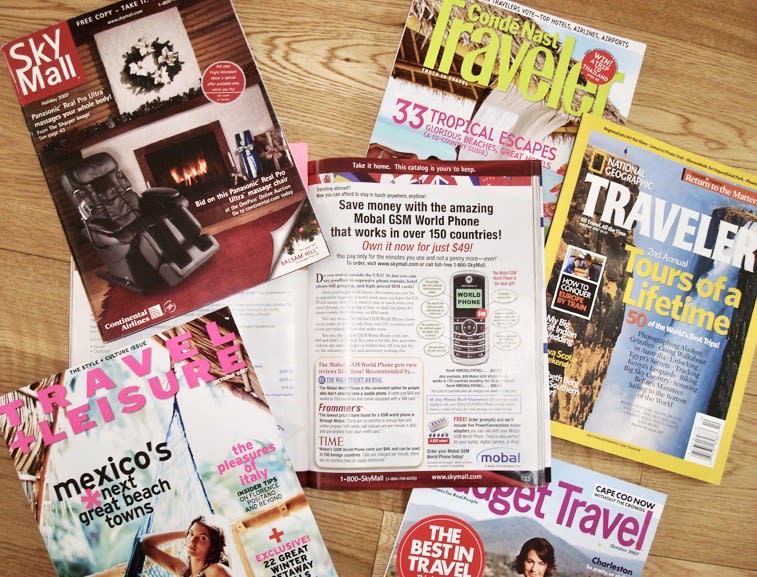
- A winning landing page can be adapted for space advertising in offline media.
- If a particular offer performs well in your own marketing materials, your affiliates may benefit from using it too.
Each win often reveals new opportunities
The CRE Methodology™ process is iterative; subsequent experimental plans will be based on the outcome of the previous experiments. Each improvement builds upon the success of the previous ones. Each time the conversion rate is increased, it becomes increasingly difficult for competitors to compete. Also, as your conversion rate grows, more opportunities present themselves. After each split test, it’s important to “zoom out” and look at the whole conversion funnel again, to determine which part of the business we should focus on next.
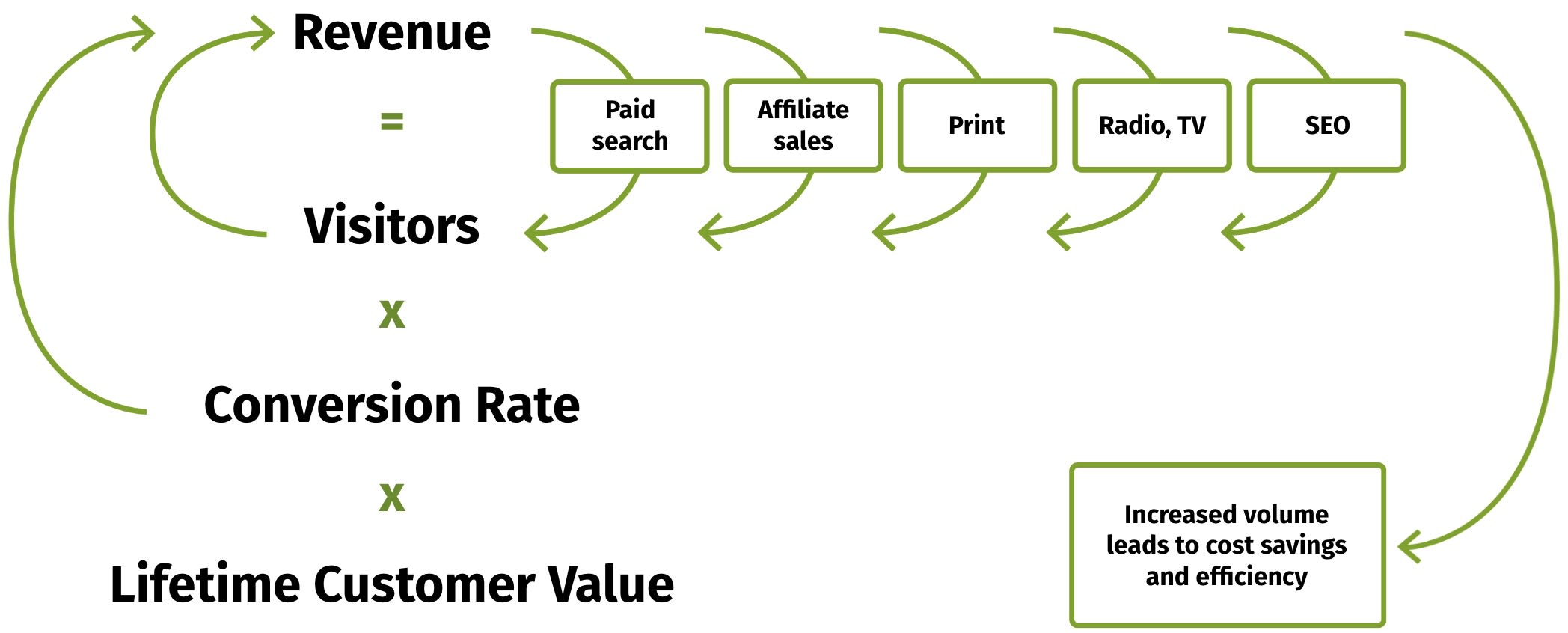
As this overview has shown, The CRE Methodology™ is not about best-practice page elements; it’s a process of activities that encompass a wide range of disciplines. Although it sounds less appealing than applying “magic buttons,” we don’t know of an easier, more reliable way to grow an online business.
What’s your goal today?
1. Hire us to grow your company
We’ve generated hundreds of millions for our clients, using our unique CRE Methodology™. To discover how we can help grow your business:
- Read our case studies, client success stories, and video testimonials.
- Learn about us, and our unique values, beliefs and quirks.
- Visit our “Services” page to see the process by which we assess whether we’re a good fit for each other.
- Schedule your FREE website strategy session with one of our renowned experts.
Schedule your FREE strategy session
2. Learn how to do conversion
Download a free copy of our Amazon #1 best-selling book, Making Websites Win, recommended by Google, Facebook, Microsoft, Moz, Econsultancy, and many more industry leaders. You’ll also be subscribed to our email newsletter and notified whenever we publish new articles or have something interesting to share.
Browse hundreds of articles, containing an amazing number of useful tools and techniques. Many readers tell us they have doubled their sales by following the advice in these articles.
Download a free copy of our best-selling book
3. Join our team
If you want to join our team—or discover why our team members love working with us—then see our “Careers” page.
4. Contact us
We help businesses worldwide, so get in touch!
© 2026 Conversion Rate Experts Limited. All rights reserved.
A Brandwidth Group Company.